The first night patrols
The first wildlife fieldwork.
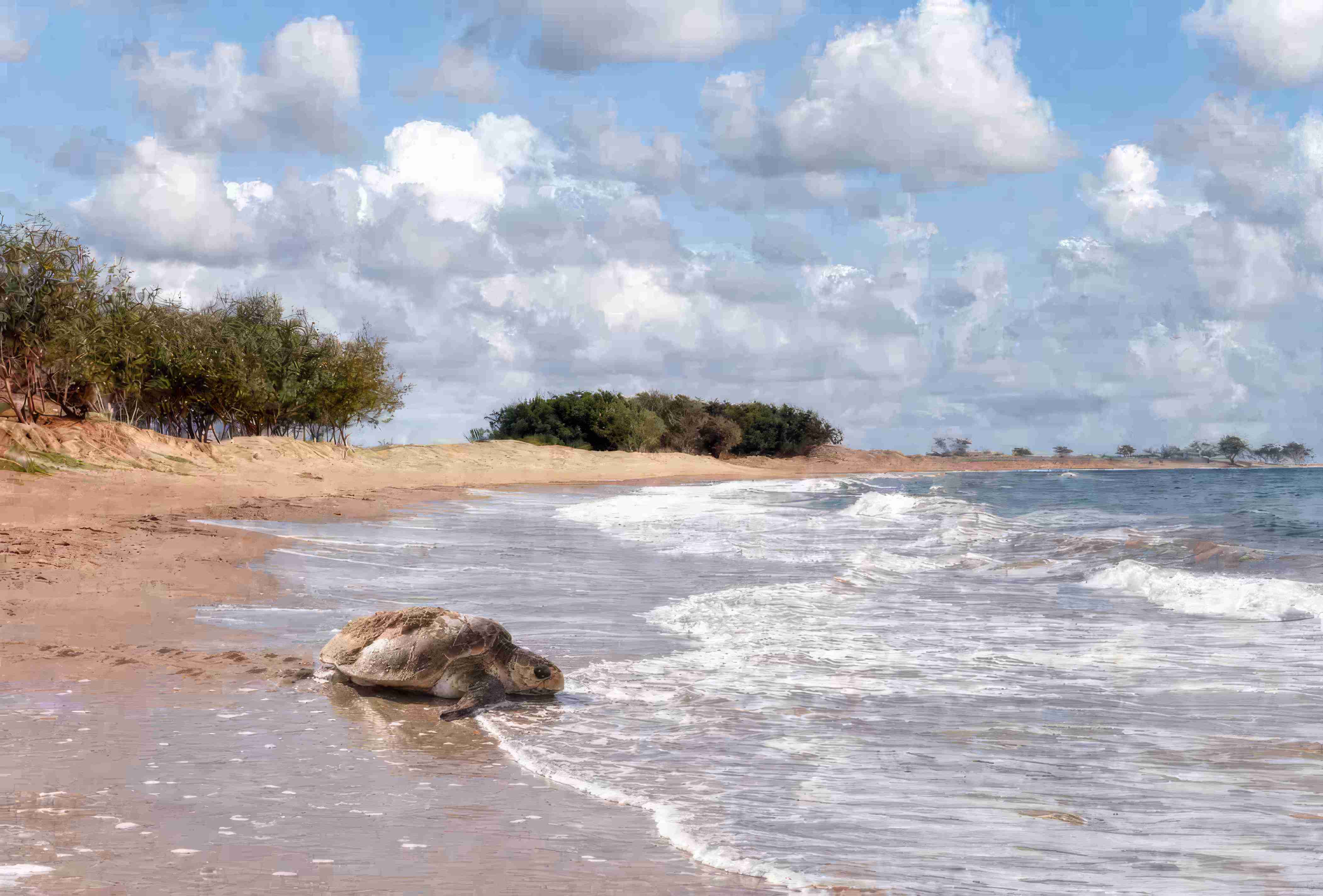
I arrived at Mon Repos in October 1976 with a small backpack, some clothes, toiletries and my cameras. I was twenty-one and trying not to show how much I wanted to belong there.
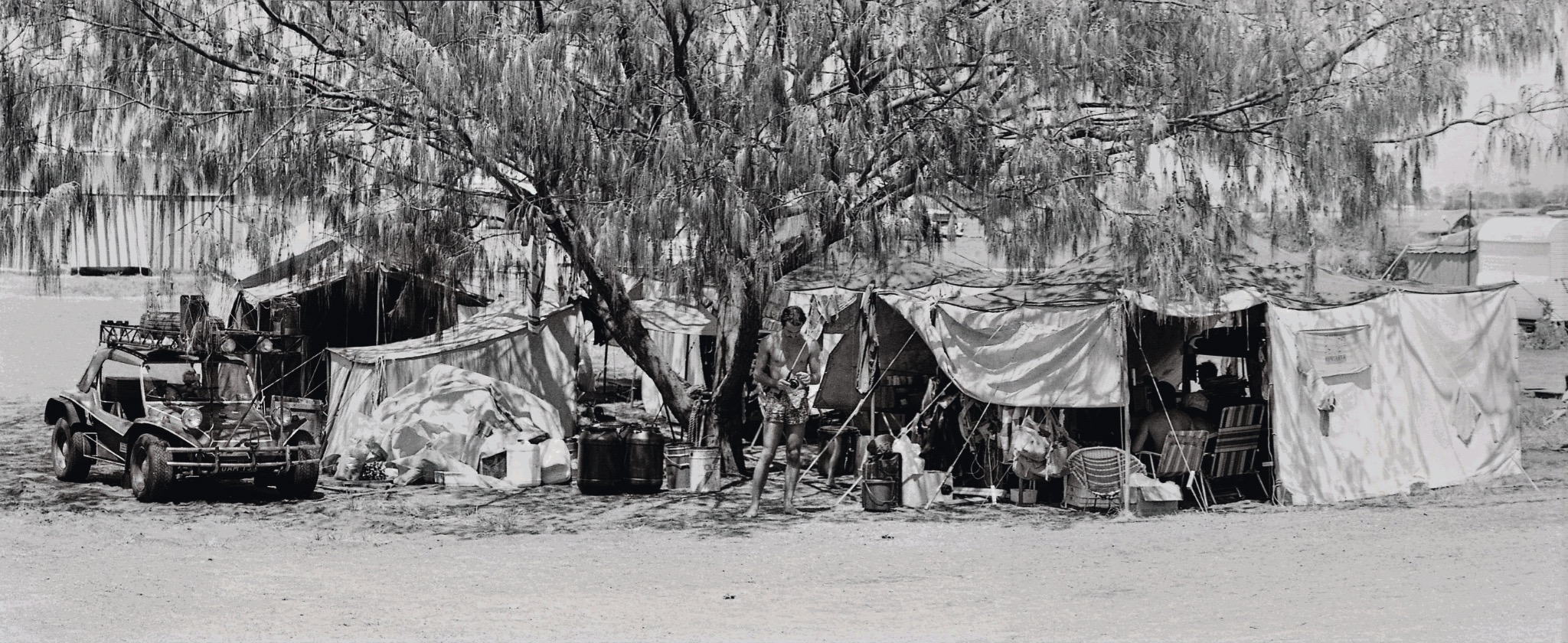
The camp was simple: tents beneath the casuarinas, shared meals, an office area and the dune buggy used for patrols. The work was equally direct — walk the beach, find the turtles, measure, tag and record. What I did not yet understand was how much those weeks would shape the way I looked at wildlife, fieldwork and the people who quietly become mentors.
Night work
The beach changed after dark. A turtle coming ashore was first a dark shape in the surf, then the slow drag of weight across the sand. We learned not to rush her. Once she settled into digging, the work began.
There was something steadying about the routine. The night narrowed to torchlight, tracks in the sand and the sound of the sea. Everything else seemed temporarily less important.
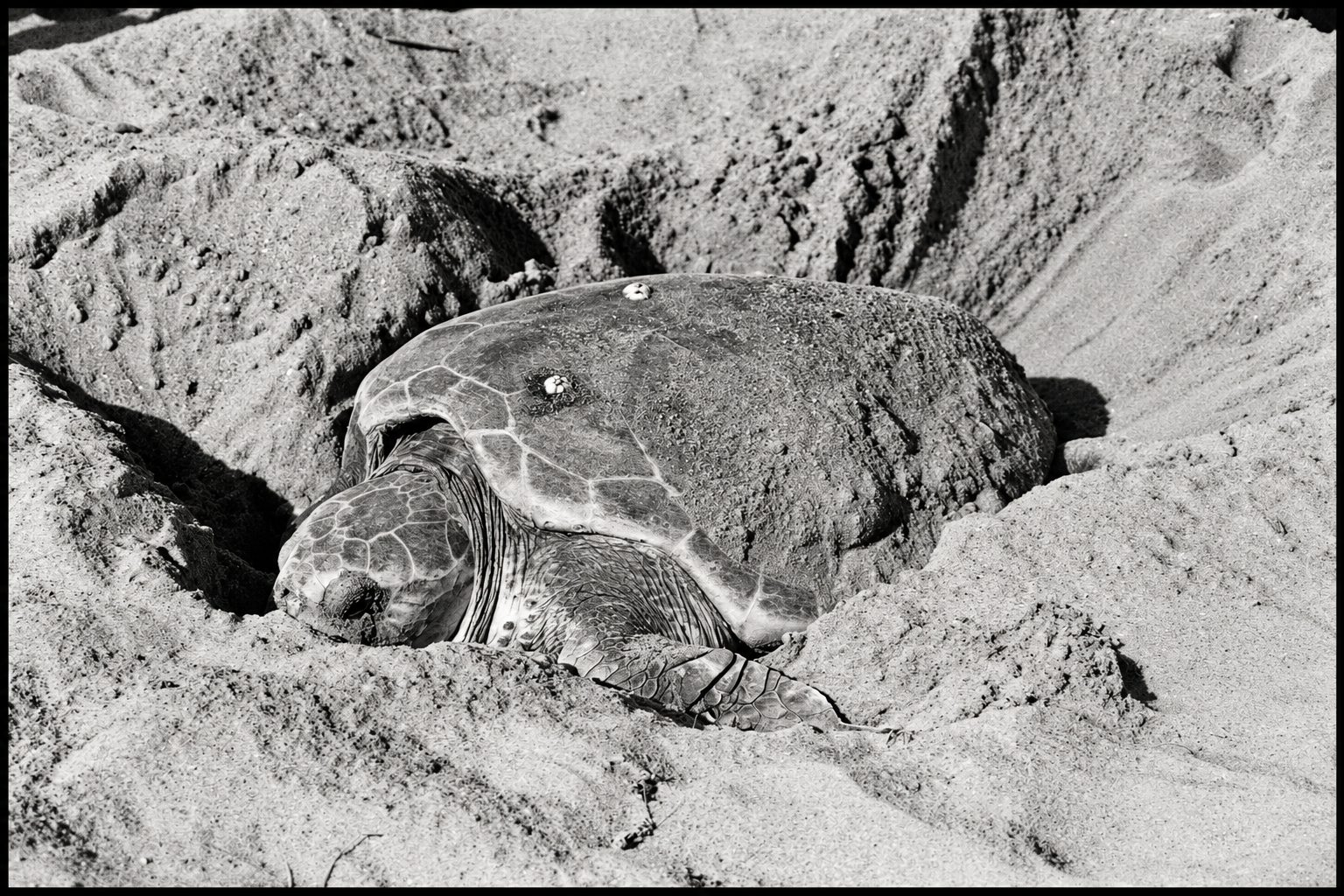
Mon Repos was the first time wildlife work stopped being something I had imagined and became something I had done.
What stayed with me
I returned to Brisbane with rolls of film, field notes and a much clearer idea of the kind of work I wanted to be around. In the darkroom, as prints slowly appeared in the developer, the beach came back in fragments: turtles, tracks, camp, faces, night.